Making Room for an Old Custom at a New Gathering
Adapting an old custom for a new gathering helps each generation understand its meaning, take part comfortably and carry a recognisable version forward.
An old seasonal custom can feel awkward when a gathering brings together people who know it by heart and people meeting it for the first time. Adapting an old custom for a new gathering does not require choosing between preserving every detail and starting afresh. The useful question is what the custom means to those present, and which parts help that meaning travel.
A decision guide works better than a fixed formula because families arrive with different needs. One gathering may need a clear explanation; another may need a quieter way to join in. Begin by identifying what the custom is for, then decide how much room to leave around it.
When meaning is assumed
If long-time participants know the custom but newcomers do not, explain its purpose before the gathering rather than pausing for a lecture halfway through. A sentence or two is enough to give people a foothold: what happens, what it means to those who keep it, and whether anyone is expected to take part.
Be specific without presenting one person’s interpretation as the only possible one. A seasonal meal might mark a return to familiar foods, a shared pause in a busy stretch, or the chance to welcome someone home. Different relatives may attach different memories to the same bowl or song. Naming that variety can make a custom easier to enter, not less coherent.
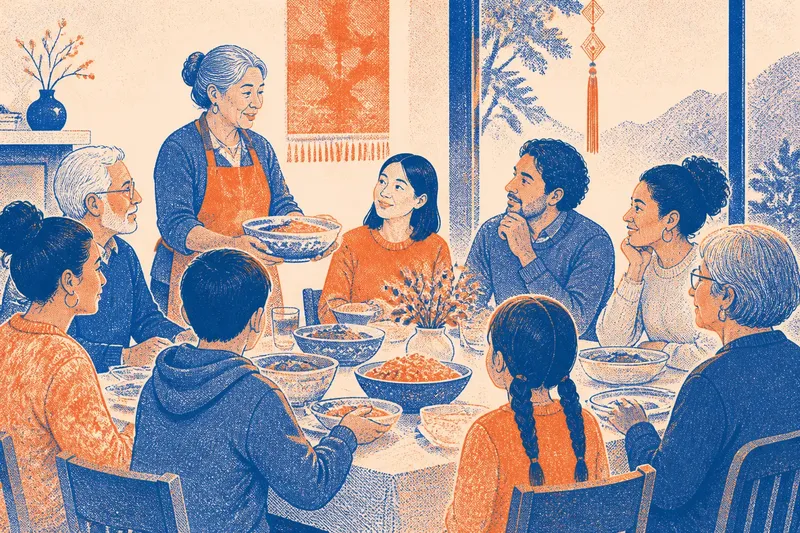
Say you are hosting a winter meal where older relatives traditionally serve a particular dish before anyone begins eating. Younger guests have never seen the practice, so you explain that the first serving remembers a relative who taught the recipe. You ask whether someone would like to help carry the dish. The expected result is that guests understand the gesture and can choose a part in it without being singled out.
If meaning is assumed, explain it briefly before inviting anyone to participate.
When keepers are needed
Some traditions depend on people who know how to lead them: a call-and-response, a family song, a sequence of greetings, or the preparation of a particular food. If the customary leader cannot attend, the question is not simply who can imitate them. Decide which part needs continuity and which can be shared.
Invite contributions that suit each person. Someone might choose the music, tell why a phrase matters, set out serving pieces, or explain a family word. A child may prefer to hand out ingredients rather than speak to the whole room. A relative who would rather not perform can still choose what the group will hear or see.
Do not assume that the oldest person must lead or that the youngest wants to learn on demand. Ask privately and early. A public request can make a family custom feel like an audition, which is a curious way to encourage affection for it.
When a custom relies on a few people, divide its parts instead of appointing one substitute for the whole role.
When participation varies
A mixed-age gathering may include people who cannot stand for long, hear a quiet speaker, eat a particular food, or join a lively group activity. Adapt the format before the event. Keep a seated role available, offer a written version of spoken words, or place a small amount of the traditional food alongside alternatives.
These choices need not dilute the custom. They can preserve its central action while changing how people take part. If the familiar practice is to pass something around, a person can invite the next participant to choose where it goes. If the custom involves singing, listening or keeping time can be meaningful roles too.
Ask about access needs without turning someone into the event’s public explanation. Where food, mobility, hearing or other health concerns are involved, use common sense and consult a qualified professional when the individual situation calls for it.
Offer more than one role and let people choose without explanation.
Questions about adapting customs?
Should every detail stay the same?
No. Keep the actions that carry the custom’s meaning, and identify which details are habits rather than necessities. A familiar order may matter to some relatives, while a particular chair arrangement may not.
How can newcomers join without pressure?
Explain what will happen and make listening a valid form of participation. Offer a small optional role, such as choosing a song or passing a dish, rather than asking someone to perform in front of everyone.
What if relatives disagree about the meaning?
Let people describe what the custom means to them without forcing a single family verdict. If the disagreement affects the gathering, choose a version that does not erase anyone’s account or require anyone to claim more certainty than they have.
Can the custom change from year to year?
Yes. Keep a simple note of what the group chose and what people want to revisit, rather than treating one gathering as a permanent ruling. A tradition can remain recognisable while its participants and circumstances change.
When circumstances change
If the gathering has moved to a new home, a different season, or a smaller group, avoid recreating details that no longer fit. Instead, name the element people most want to carry forward. It might be a shared toast, a particular greeting, the first taste of a seasonal dish, or a moment when everyone contributes a word.
Then decide what can sensibly shift: the timing, setting, person who leads, or materials used. A custom built around a large table might become a short exchange in a living room. A food tradition may use a recipe adapted for available ingredients while retaining the act of making it together. Make the adaptation visible so people know it was chosen, not accidentally omitted.
Keep the explanation proportionate. A brief acknowledgement that the gathering is different, followed by the reason for the change, helps people orient themselves. Avoid apologising for every adjustment. A custom is not a museum display, and no one needs to pretend the old arrangement is still possible.
When circumstances have changed, preserve one recognisable action and choose the rest for the people present.
Choosing a first version
For a first adaptation, make a few decisions before inviting people to take part. Check each point and let the result guide the next choice:
- Check whether participants can name the custom’s meaning; if they can, use that shared explanation, then offer a chance to add differing memories, otherwise ask a keeper to explain it before the gathering.
- Check which action people say they would miss; if they name a recognisable action, keep it, otherwise ask what object, phrase or moment helps them recognise the custom.
- Check whether the customary leader can attend; if they can, ask what role they want, otherwise divide the familiar tasks among willing participants.
- Check whether anyone needs a seated, quiet or non-speaking role; if so, offer one in advance, otherwise still make listening an acceptable way to participate.
- Check whether food or access needs affect the planned format; if they do, provide a suitable alternative or seek qualified advice where health concerns matter, otherwise keep the familiar arrangement.
- Check whether relatives disagree about an element’s meaning; if they do, avoid presenting one account as the family’s only view, otherwise explain the shared understanding briefly.
Say a family is planning a winter meal in a smaller flat, and the relative who usually leads the first serving cannot attend. The group identifies the first serving as the action they most want to retain, while the usual spoken explanation is optional. They ask one willing person to carry the dish, invite another to say why the recipe matters, and make a seated listening role available. The result is a recognisable custom with shared roles; the trade-off is that it no longer follows the customary leader’s exact sequence. The family can note that choice and decide later whether to adjust it.
Making changes legible
Once you have chosen a version, tell people what is staying and what is changing. That distinction prevents a newcomer from guessing and an experienced participant from assuming something has been forgotten. It also makes the decision easier to revisit next time.
After the gathering, ask what felt meaningful and what was difficult to join. Do not treat every preference as a vote on the custom’s future. Use the answers to make one adjustment at a time, such as shortening a spoken part or inviting another person to lead.
Adapting an old custom for a new gathering works best when its meaning is clear, its roles are open, and its changes are named. Make a short note of the version the group chose, including who wished to lead and what they would alter. That gives the next gathering a starting point, not a rulebook.